Vietnam works well as a plywood sourcing location because it combines a large wood-processing industry, plantation timber, export infrastructure, and established access to overseas markets. Vietnam had more than 14.8 million hectares of forest and 42.03% forest coverage in 2025, while wood and forest-product exports reached more than US$17.2 billion in 2024. In 2025, timber and wood-product exports reached US$17.2 billion, with the United States accounting for about 55% and Japan exceeding US$2.1 billion. For plywood importers, the combination supports raw-material sourcing, panel processing, container exports, traceability, and production for furniture, construction, packaging, and distribution markets.
Vietnam’s plywood industry sits inside a much larger wood-manufacturing network rather than operating as a small standalone panel sector. In Q1 2025 alone, Vietnamese wood and wood-product exports reached US$3.95 billion, 11.6% higher than Q1 2024. The United States represented 53.1% of exports, followed by Japan at 13.2% and China at 10.6%. A plywood factory working inside an export industry of this size can source services for veneer preparation, kiln drying, glue mixing, hot pressing, calibration, sanding, cutting, testing, packing, container loading, and international freight.
The scale continued to grow after Q1. Forestry exports reached US$18.3 billion in 2025 and another US$10.8 billion during the first seven months of 2026, up 4.6% year over year. Vietnam is also working toward about 1 million hectares of large-timber production plantations by 2030. More domestic large-diameter timber can give panel and furniture producers another source of material alongside smaller plantation logs and imported wood.
Raw-material availability matters because plywood cost and consistency begin with veneer. Vietnam reported more than 14.8 million hectares of forest and a forest coverage rate of 42.03% in 2025. Its plantation forestry base supplies wood to processing industries, while manufacturers can also use legally imported timber when a specification requires another species or grade. The combination gives factories more options when selecting material for cores, faces, backs, furniture panels, construction panels, and Commercial Plywood.
Species selection alone does not determine panel performance. A 12 mm furniture panel and an 18 mm construction panel may require different veneer thicknesses, ply structures, adhesives, moisture targets, surface grades, and pressing conditions. Buyers should therefore specify nominal thickness, tolerance, face and back grade, core species, glue class, moisture content, dimensions, sanding, edge quality, emission limits, and packing method before asking factories for comparable quotations.
That level of specification also makes Vietnam’s manufacturing depth more useful. A factory can adjust veneer lay-up, glue spread, press temperature, pressure, sanding, and final grading around an OEM order instead of supplying one standard panel. For importers ordering several containers per month, repeatability across batches matters more than the appearance of a few samples; production records and pre-shipment inspection provide a better basis for comparing batches.
A practical quality-control sheet can therefore be short but numerical:
| Inspection point | What the buyer should define |
|---|---|
| Thickness | Nominal size plus acceptable ± tolerance |
| Moisture | Maximum or agreed percentage |
| Dimensions | Length, width and diagonal tolerance |
| Core | Species, gaps, overlaps and repairs |
| Bonding | Required glue/bond class and test method |
| Surface | Face/back grade and sanding requirement |
| Emissions | Applicable destination-market standard |
| Packing | Sheets per bundle, marks and protection |
The same numerical approach should be used for purchasing. An inexpensive sheet can cost more after import when rejected panels, inconsistent thickness, delamination, excessive moisture, poor machining, or low container utilization are included. Buyers comparing offers in 2026 should calculate cost per accepted sheet or usable cubic metre rather than comparing FOB prices alone. Container payload, sheets per bundle, panel dimensions, gross weight, inland haulage, ocean freight, testing, and import charges belong in the same calculation.
Export experience helps factories manage those details. Vietnam exported timber products to about 120 countries and territories and imported timber from roughly 80 countries according to the EU’s description of its timber trade network. The supply base therefore combines domestic plantation resources with an international timber procurement network, while finished wood products already move to the EU, United States, Japan, South Korea, Australia, and other established destinations.
The destination mix is commercially important. In 2025, Vietnamese timber and wood-product exports to the United States reached about US$9.46 billion, up 4.4% from 2024 and representing approximately 55% of industry export turnover. Exports to Japan increased by more than 23% to over US$2.1 billion. Factories supplying markets at that scale regularly deal with commercial invoices, packing lists, bills of lading, certificates, shipping marks, pallet specifications, container schedules, and buyer-specific documentation.
European sourcing adds another layer because timber origin and traceability have become part of purchasing work. The EU–Vietnam VPA/FLEGT agreement entered into force on 1 June 2019 after negotiations that began in 2010 and continued for more than six years. Vietnam subsequently developed its Timber Legality Assurance System, or VNTLAS, covering legal controls for timber produced domestically as well as imported material.
Plywood is specifically included within the product scope described by the EU alongside logs, sawn timber, railway sleepers, and veneer. Buyers still need supplier-level documentation rather than relying on country of manufacture alone. Timber species, harvest or purchase records, supplier invoices, chain-of-custody information where applicable, production records, and shipment documentation should connect the material entering a factory with the plywood leaving it.
European requirements are becoming more detailed as traceability develops. Under the EUDR framework, timber is among the commodities covered by requirements concerning deforestation and forest degradation after the 31 December 2020 cut-off date. EU and Vietnamese authorities held technical exchanges in July and November 2024 covering traceability and preparation for the regulation. Importers selling plywood into Europe therefore have a commercial reason to ask how a supplier records timber origin before approving volume orders.
Supplier documentation should be checked against the actual product and factory rather than collected as a folder of certificates. A certificate may apply to one legal entity, facility, product scope, or validity period. Buyers can compare the company name, factory address, scope, issue date, expiry date, certificate number, timber species, purchase records, and shipment references. A 2026 purchase order should not rely on a certificate that cannot be matched to the goods being purchased.
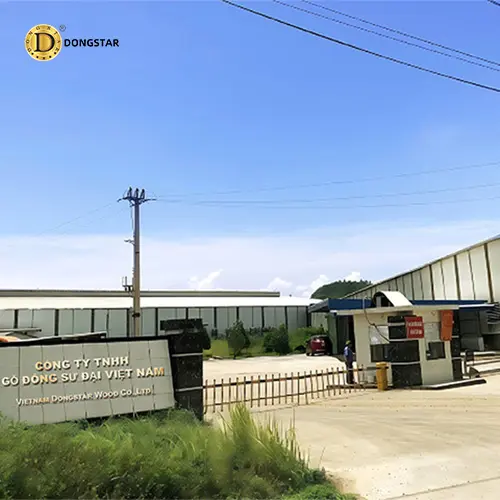
Dongstar Wood is a Vietnam-based plywood manufacturer and exporter under Dongstar Group, serving customers across 44 European countries since 2009. We specialize in commercial plywood, film faced plywood, construction plywood, birch plywood, furniture plywood, and customized plywood solutions.
Backed by CE 2+, FSC®, EUDR, DOP, and SEDEX (BSCI) certifications, we meet European standards for quality, sustainability, and compliance. With over 15 years of manufacturing and export experience, we support importers, distributors, furniture manufacturers, and construction companies with reliable plywood supply and OEM/ODM solutions.
Factory capability still needs to match the intended use. Furniture manufacturers may need calibrated thickness, clean faces, good screw holding, stable machining, and controlled formaldehyde emissions. Construction buyers may place more weight on bond durability, panel stiffness, edge condition, water resistance, and repeated handling. Packaging customers often focus on dimensional stability, core integrity, weight, and price. One factory can manufacture several categories, but the production specification should remain separate for each application.
Film-faced plywood provides a useful example. Panel performance depends on more than the film itself: veneer quality, core construction, glue spread, press conditions, film weight, edge sealing, storage, and exposure during use all affect the finished board. A buyer ordering 18 mm panels in 2026 should define thickness tolerance and bonding requirements instead of assuming every “18 mm film-faced plywood” quotation describes the same construction.
Furniture plywood requires a different inspection approach. Sanding calibration and surface quality affect laminating and CNC machining, while internal voids can appear when panels are routed or drilled. For a large order, inspection samples should come from different bundles and production points rather than one prepared stack. The purchase specification can state an agreed sampling method, defect classification, acceptance level, and test procedure before production starts.
Production capacity should be checked in the same practical way. A supplier quoting 20 containers per month should be able to explain veneer capacity, pressing capacity, sanding capacity, normal lead time, peak-season lead time, and how much production is performed at its own facility. Vietnam’s forestry exports grew to US$18.3 billion in 2025, 5.6% above the previous year, so buyers sourcing during busy periods should confirm capacity before committing shipment dates.
Logistics then become part of panel design and purchasing. Plywood is dense, rectangular, and usually containerized, so a small change in sheet dimensions, thickness, bundle height, or average panel weight can alter the number of sheets loaded into a container. Exporters should provide packing dimensions, sheets per bundle, bundle count, net weight, gross weight, moisture protection, corner protection, strapping, and loading plans before shipment.
Vietnam’s existing export volume supports access to freight forwarding, customs services, container terminals, and international shipping routes. The industry shipped US$17.2 billion of timber and wood products in 2025, including US$9.46 billion to the United States and more than US$2.1 billion to Japan. Regular trade with distant markets requires factories and exporters to work around vessel schedules, port cut-offs, container availability, export declarations, and destination documentation rather than treating transport as a separate step after production.
OEM and ODM purchasing benefits from the same manufacturing base. Buyers can specify panel dimensions, thickness, veneer arrangement, face grade, glue, sanding, branding, labels, bundle size, pallet construction, shipping marks, and documentation. An approved sample should be accompanied by a written specification so later production is compared with measurable requirements rather than memory or photographs.
Before a first commercial shipment, buyers can use a staged qualification process: review company and factory records, check timber documentation, approve technical specifications, test samples, inspect production, and conduct pre-shipment checks. For repeat orders, inspection data can be compared by batch and year. A supplier that maintained agreed tolerances through 2024, 2025, and 2026 provides more useful purchasing information than a supplier presenting one unusually good sample.
Vietnam’s manufacturing position is supported by measurable scale: more than 14.8 million hectares of forest, 42.03% forest coverage reported in 2025, US$17.2 billion in timber and wood-product exports in 2025, and US$10.8 billion in forestry exports during the first seven months of 2026. For plywood buyers, those figures are most useful when paired with factory audits, written tolerances, material records, batch inspection, compliance documents, and landed-cost calculations for the exact panel being purchased.