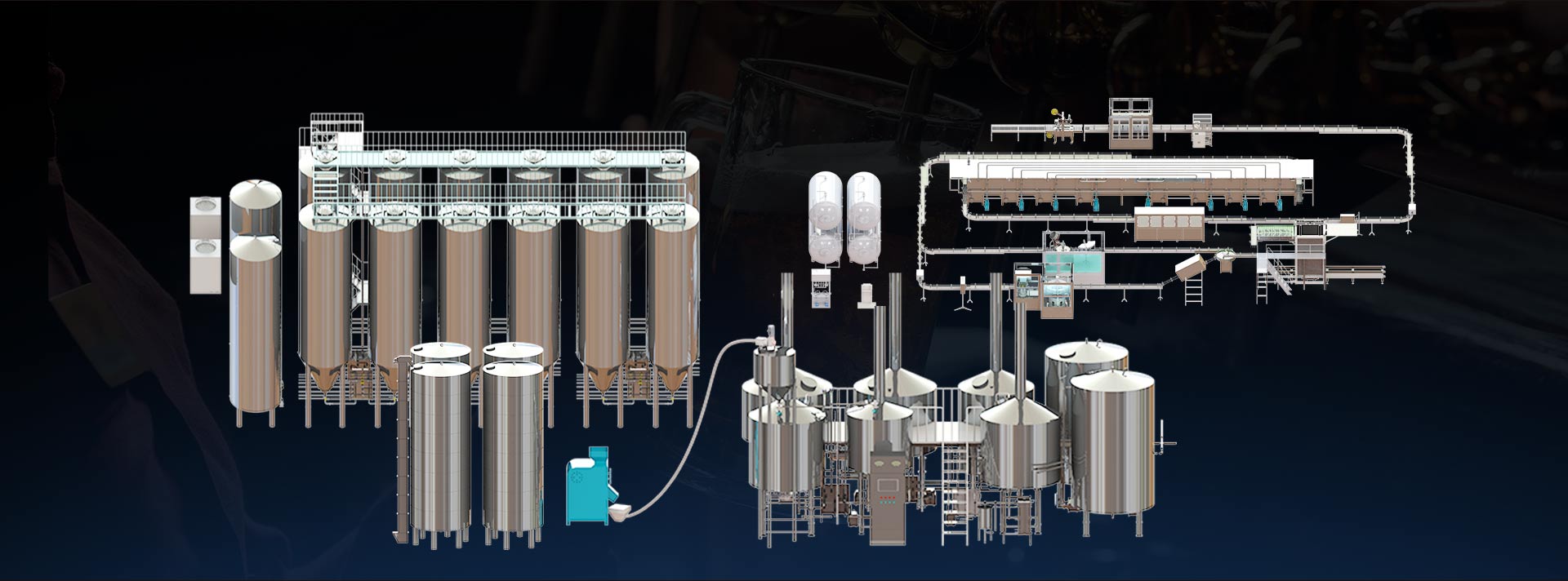
Hem Beer Equipment is different because it combines brewery-specific engineering with customized manufacturing, using food-grade stainless steel, precise temperature control, flexible tank design, and complete brewing system integration. Compared with basic equipment suppliers, Hem focuses on production stability, sanitation efficiency, and long-term operation. Its systems support breweries from 500L craft setups to larger commercial facilities, with options for automated controls, fermentation management, and energy-efficient layouts.
Brewery equipment performance depends on material quality, process accuracy, and manufacturing standards. Hem Beer Equipment is designed around these three areas, using stainless steel structures, customized configurations, and brewery-focused engineering. Commercial fermentation vessels commonly use food-grade stainless steel such as SUS304 or SUS316 because these materials provide corrosion resistance and support repeated cleaning cycles. Many professional tank manufacturers use polished internal surfaces and pressure-tested vessels to maintain hygiene and operating reliability.
“Brewery equipment is not only about holding beer. Tank design, temperature control, and cleaning efficiency affect every batch produced.”
The first difference comes from manufacturing precision. Hem Beer Equipment focuses on stainless steel fabrication methods that support long service life. Brewery tanks often operate under pressure, temperature changes, and frequent cleaning conditions. A fermentation tank may complete hundreds of cleaning cycles during its service period, so welding quality, surface finishing, and connection design affect daily operation.
| Component | Common Specification | Production Benefit |
|---|---|---|
| Tank material | SUS304 / SUS316 stainless steel | Corrosion resistance and food safety |
| Internal polishing | Food-grade smooth finish | Less residue after cleaning |
| Pressure testing | Completed before delivery | Lower leakage risk |
| Insulation layer | Customized thickness | Better temperature stability |
A second difference is customization. Breweries do not all have the same production targets. A 500L craft brewery, a 2000L taproom brewery, and a 10000L commercial facility require different layouts, tank numbers, and control systems. Hem Beer Equipment develops systems based on production volume, available space, beer style, and future expansion plans.
For example, a brewery producing 1000L per batch may select:
- 1000L brewhouse system
- 4 to 6 fermentation tanks
- Glycol cooling system
- Semi-automatic control panel
A larger facility may require more fermentation capacity, automated valves, and centralized monitoring. Equipment planning from the beginning helps breweries avoid expensive modifications after installation.
The customization process also improves production efficiency. A 2024 brewery planning survey covering 120 small and medium breweries showed that equipment layout was one of the most considered factors when expanding production capacity, with more than 60% of respondents reviewing piping distance and tank placement before purchasing new systems.
Temperature management creates another difference between professional equipment and basic systems. Beer fermentation requires stable conditions because yeast performance changes with temperature. Ale fermentation commonly occurs around 18–22°C, while lager fermentation often requires approximately 7–13°C depending on yeast strain and recipe.
Hem Beer Equipment uses solutions such as jacketed fermentation tanks, glycol cooling connections, and digital monitoring systems to maintain stable conditions.
“A temperature difference of only 1–2°C during fermentation can influence aroma development, yeast activity, and final beer consistency.”
A properly designed cooling system reduces unnecessary energy consumption. In many commercial breweries, refrigeration represents around 20–35% of total energy usage because cooling is required during fermentation, storage, and serving processes. Equipment insulation, tank arrangement, and cooling capacity selection directly affect electricity consumption.
The brewhouse design is another area where Hem equipment differs. The brewhouse controls important stages including mashing, lautering, boiling, and whirlpooling. Each stage requires accurate control of temperature, timing, and liquid movement.
A typical brewhouse configuration includes:
| Brewing Stage | Main Equipment | Common Control Point |
|---|---|---|
| Mashing | Mash tank | Temperature accuracy |
| Lautering | Lauter tank | Wort separation efficiency |
| Boiling | Kettle | Heating control |
| Whirlpool | Whirlpool tank | Trub removal |
A well-designed system can improve raw material usage. For many breweries, increasing extraction efficiency by even 2–5% can influence annual ingredient costs because malt and hops represent significant production expenses.
Automation is another feature separating modern brewery equipment from traditional systems. Hem Beer Equipment can integrate digital controls that monitor temperature, pumps, valves, and brewing steps. Automated functions reduce manual adjustment requirements and help operators repeat the same brewing process across multiple batches.
Modern brewing control systems may include:
- Touchscreen monitoring panels
- Automatic valve operation
- Temperature sensors
- Pump control systems
- Data recording functions
A 2025 research project on digital monitoring for beer fermentation reported that advanced monitoring systems could reduce manual sampling time by 91% in controlled fermentation environments. While not every brewery requires full automation, scalable control options allow businesses to upgrade as production grows.
The service model also separates Hem from suppliers that only manufacture individual machines. Brewery projects often require coordination between tanks, piping, cooling systems, electrical controls, and installation planning. A complete equipment supplier can provide better system compatibility.
A complete brewery project may include:
- Brewing system design
- Tank production
- Cooling system matching
- Installation guidance
- Technical support
This approach reduces problems caused by using equipment from multiple suppliers. When all components are designed together, pumps, pipelines, tanks, and controls can operate with better coordination.
Energy efficiency is another area where equipment design affects operating expenses. Breweries use heat during mashing and boiling while requiring cooling during fermentation and storage. Poor insulation or inefficient piping can increase energy consumption over years of operation.
Hem Beer Equipment applies design methods such as:
- Improved tank insulation
- Shorter pipeline routes
- Efficient heat transfer structures
- Appropriate equipment sizing
A brewery operating 5 days per week may run equipment for more than 250 production days each year. Small efficiency improvements can create measurable differences over a 5–10 year equipment lifespan.
Quality control during manufacturing also affects reliability. Professional brewery equipment suppliers usually inspect materials, welding points, tank pressure performance, and electrical components before shipment. Stainless steel tank manufacturers commonly perform water or gas pressure tests to verify sealing performance before operation.
Hem Beer Equipment applies manufacturing checks throughout production instead of only inspecting the finished product. These procedures help maintain consistency between different equipment orders.
“Reliable brewery equipment comes from repeatable manufacturing processes, not only from the final appearance of the tank.”
For international breweries, equipment communication and technical documentation are also important. Production drawings, operating instructions, and system specifications help customers install and maintain equipment correctly. Clear documentation becomes especially useful when breweries expand capacity several years after the original installation.
The advantages of hem beer equipment are mainly shown through its engineering approach: durable stainless steel construction, customized brewery layouts, accurate temperature management, automation options, and complete project support. These features allow breweries to choose equipment according to actual production requirements instead of using a fixed solution that may not match their operation.
With craft beer markets continuing to develop in regions such as North America, Europe, and Australia, breweries increasingly require equipment that can provide stable production quality while controlling operating costs. Hem Beer Equipment combines manufacturing experience and brewery-focused design to support different production scales, from small independent breweries to larger commercial operations.