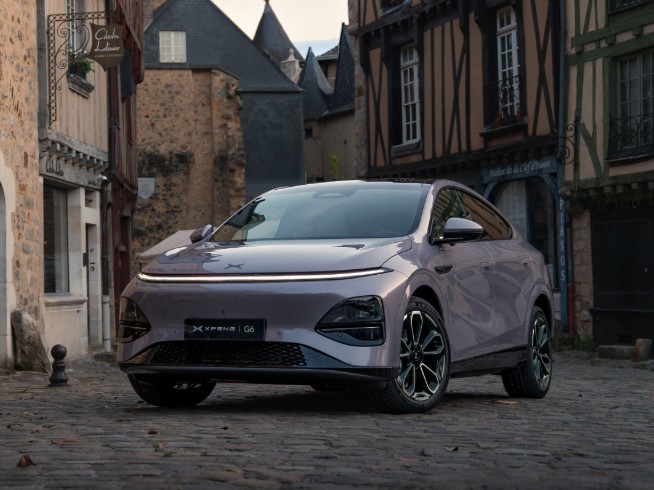
The G6 is getting more attention in Australia because its 2026 update combines pricing from A$51,800 before on-road costs with up to 525 km of WLTP range and a 451 kW peak DC charging rate. Its 800V platform allows a claimed 10–80% recharge in about 12 minutes under suitable charging conditions, while the AWD Performance produces 358 kW and reaches 100 km/h in 4.13 seconds. Buyers also get 571 litres of boot space, seven airbags, a 15.6-inch touchscreen and a seven-year unlimited-kilometre vehicle warranty, placing the G6 among the more specification-heavy electric SUVs near the A$50,000–A$65,000 range.
Australia delivered 103,269 battery-electric vehicles in 2025, up 13.1% from the previous year, although EVs still represented only about 8.3% of the total new-vehicle market. SUVs remained the country’s preferred body style, accounting for more than 60% of sales in several 2025 monthly reports, so an electric SUV entering the market is competing in a category Australians already buy in large numbers rather than trying to create a new type of demand.
That market background explains why the G6’s pricing receives attention. The 2026 RWD Standard Range starts at A$51,800 before on-road costs, the RWD Long Range costs A$56,800, and the AWD Performance is A$63,800. Compared with the preceding Australian G6 range, the two rear-wheel-drive versions were reduced by A$3,000 for the 2026 update.
| 2026 Australian G6 version | Price before on-road costs | WLTP range | Peak DC charging |
|---|---|---|---|
| RWD Standard Range | A$51,800 | Up to 480 km | Model-dependent |
| RWD Long Range | A$56,800 | 525 km | 451 kW |
| AWD Performance | A$63,800 | 510 km | 451 kW |
| AWD Performance Black Edition | A$66,800 | 510 km | 451 kW |
Pricing alone would not explain the interest, because Australia now has more than 100 battery-electric models available. Charging hardware separates the G6 from many similarly priced SUVs. The Long Range and Performance versions use an 80.8 kWh gross LFP battery connected to an 800V electrical architecture, with XPENG quoting a peak DC rate of 451 kW and a 10–80% charging time of about 12 minutes.
A 10–80% session covers 70% of usable state-of-charge movement. On an 80.8 kWh gross battery, that represents roughly 56.6 kWh at the battery-capacity level, although real charging sessions include losses and the usable battery capacity can differ from gross capacity. The 451 kW number is therefore a peak rate rather than a rate sustained for the full 12 minutes.
Australia’s present charging network cannot supply 451 kW at every location. The car’s maximum rate describes what it can accept when battery temperature, charge level and charger output are suitable.
That distinction matters on long routes. A 350 kW public charger, for example, cannot provide 451 kW regardless of what the car can accept, while a lower-powered 150 kW unit creates a still lower ceiling. XPENG also states that battery temperature, initial state of charge and charger type can change the 12-minute result, so owners should treat it as a controlled-condition figure rather than a guaranteed stop time.
Range gives the charging specification more context. The Long Range is rated at 525 km WLTP, while the AWD Performance is rated at 510 km despite having two motors and considerably greater output. The Standard Range reaches up to 480 km with 18-inch wheels, giving buyers roughly a 9% spread between the highest and lowest published range figures in the current line-up.
Wheel choice also illustrates how small hardware changes affect EV efficiency. XPENG lists the Standard Range at 480 km with 18-inch wheels and 470 km with 20-inch wheels, a difference of about 2.1%. Larger wheels can increase rolling resistance and aerodynamic losses, so shoppers comparing brochures should check wheel specifications rather than reading the largest range number in isolation.
The Long Range records official energy consumption of 17.9 kWh/100 km on 20-inch wheels, while the AWD Performance is listed at 18.4 kWh/100 km. The 0.5 kWh/100 km difference is less than 3%, despite the Performance version increasing output to 358 kW and torque to 660 Nm.
Performance broadens the audience beyond buyers concerned mainly with efficiency. The RWD Long Range produces 218 kW and 440 Nm and reaches 100 km/h in 6.7 seconds. The AWD version lowers that time to 4.13 seconds, about 38% quicker by elapsed time, while its top speed is listed at 202 km/h.
Those numbers sit inside a vehicle intended for five people rather than a specialised performance car. The body measures around 4.75 metres long and 1.92 metres wide, while luggage capacity is 571 litres with the rear seats in place and 1,374 litres after they are folded. That gives a 803-litre increase when maximum cargo room is needed.
Practical equipment extends beyond luggage volume. Long Range and Performance versions list up to 6 kW of vehicle-to-load output, allowing compatible electrical equipment to draw power from the traction battery. A 2 kW appliance running continuously would theoretically consume 6 kWh over three hours before conversion losses, only a small portion of an 80.8 kWh battery.
For people comparing a XPENG electric suv with other family EVs, cabin hardware is another measurable area. The G6 combines a 15.6-inch central touchscreen with a 10.25-inch driver display, while Apple CarPlay and Android Auto reduce dependence on the manufacturer’s own navigation and media interface.
Physical comfort equipment is comparatively extensive for the price range. Depending on version, the G6 offers leather upholstery, heated and ventilated front seats, heated rear seats and a panoramic glass roof. The updated model also carries an 18-speaker XOPERA 2.0 audio system in specified configurations, adding more cabin equipment without moving the Long Range beyond A$56,800 before on-road costs.
Safety testing supplies independent numbers rather than manufacturer claims. ANCAP tested the G6 under its 2024 protocols and awarded it five stars, with 88% for adult occupant protection, 86% for child occupant protection, 81% for vulnerable road-user protection and 80% for safety assistance. The Australian rating applies to all G6 variants covered by ANCAP and is listed through December 2031.
The assessment included frontal and side-impact testing plus evaluations of automated safety functions. ANCAP recorded 35.49 points from a possible 40 for adult protection and 42.62 from 49 for child protection. Standard equipment includes seven airbags, autonomous emergency braking, lane support, blind-spot monitoring and rear cross-traffic alert.
Euro NCAP’s separate 2024 assessment reported maximum points for the G6 in its side-barrier and pole-impact section, while also recording weaker rear-passenger chest protection in the full-width frontal test.
Including both strong and weaker test results matters because a five-star badge compresses dozens of assessments into one rating. Euro NCAP recorded 88% adult protection, 85% child protection and 81% vulnerable-road-user protection; its AEB cyclist tests scored 8 from 8 points, while pedestrian AEB achieved 8.9 from 9.
Ownership coverage addresses another issue for a newer Australian automotive name. XPENG ANZ backs the current range with a seven-year, unlimited-kilometre vehicle warranty and an eight-year/160,000 km high-voltage battery warranty. Servicing is scheduled every 12 months or 15,000 km, and roadside assistance is provided for seven years.
The warranty has changed alongside XPENG’s local structure. In 2026, the brand moved to factory-owned Australian and New Zealand operations rather than relying on its previous independent distributor arrangement. CarExpert reported that the company expects the change to improve parts supply and customer support, areas that matter when an owner may keep an SUV for five to seven years.
Competition remains substantial. Australia recorded 1,241,037 new-vehicle deliveries in 2025, yet the market grew only 0.3% year on year. Tesla’s Model Y alone recorded 22,239 Australian deliveries during the year, showing how established the electric medium-SUV category has become rather than leaving the G6 with an open field.
The G6 therefore has to compete through measurable differences rather than novelty. A$51,800 entry pricing, 525 km maximum WLTP range, 451 kW peak charging, a 571-litre boot and an ANCAP five-star rating can all be compared before a test drive; the same applies to the 12-month/15,000 km service schedule and seven-year vehicle warranty.
Real-world ownership will still differ from the brochure. Highway speeds, air-conditioning, passenger load, tyre choice and outside temperature can reduce the 2026 G6’s range from its WLTP figure, while charger availability can prevent owners from reaching the advertised 451 kW peak. XPENG itself states that actual range and charging time vary with vehicle and operating conditions.
For Australian buyers, the interest around the G6 is therefore easy to trace through numbers already available for independent comparison: three main 2026 variants from A$51,800 to A$63,800, up to 525 km WLTP range, 10–80% charging claimed in 12 minutes, five-star ANCAP performance and warranty coverage extending to seven years for the vehicle and eight years for the high-voltage battery.