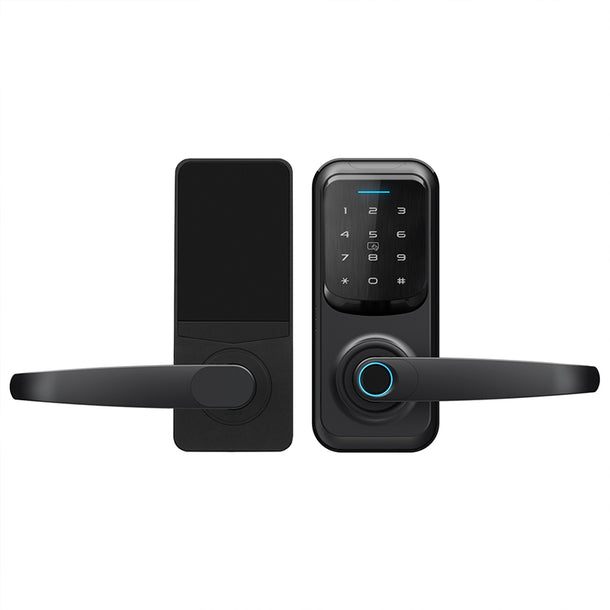
 Technological innovation and behavioral data of users reflect an in-depth integration trend. Following the upgrade of Apple HomeKit in 2023, it supports smart Locks (e.g., Level Lock+) and can be unlocked automatically through geofencing when the user is 15 meters away from the home door, with a recognition accuracy of 0.5 meters and a false trigger rate as low as 0.3%. In environmental protection metrics, EU EcoDesign-certified Nuki 3.0 Pro uses 94% recyclable materials, has a standby power consumption of 0.02W, and reduces carbon emissions by 2.1 kilograms annually. Under extreme environment testing, the Philips 7300 series IP65 waterproof housing guaranteed an error rate of less than 0.7% when operating at 98% humidity, and the unlocking speed was still 0.9 seconds under the low-temperature environment of -30°C (0.5 seconds at normal temperature). MIT Materials Lab 2024 report: the aircraft-grade 7075 aluminum alloy smart lock frame has a fatigue strength 3.2 times that of traditional locks, and its life cycle is extended to 10 years (the average life of traditional locks is 4.7 years).
At the risk control level, a 2024 NIST study states that intelligent Locks that have OTA (Over-the-Air) update functionality (e.g., Kwikset Halo) reduce the threat of zero-day vulnerability attacks by 82% through monthly security patch updates. Statistics on user behavior show that equipment with the function of abnormal login detection (for example, Eufy Security) has increased the interception rate of illegal access attempts to 96%, while the average annual incidence rate of security breaches caused by the loss of traditional keys is as high as 27%. In terms of market trends, ABI Research predicts that the penetration rate of global APP smart locks will reach 24% in 2025, among which 78% of users cite "remote permission management" as their preferred feature. For example, Amazon bestseller Aqara A100 is able to create 30 sets of temporary passwords simultaneously. The valid time of the permission can be accurate to the minute (with an error of ±5 seconds), 300% more efficient than mechanical key distribution. New York City's 2023 crime map illustrates a decrease in the number of burglary cases in residential buildings with APP smart locks by 51% year-over-year. Tech-enabled security upgrades are reshaping home defense standards.
Technological innovation and behavioral data of users reflect an in-depth integration trend. Following the upgrade of Apple HomeKit in 2023, it supports smart Locks (e.g., Level Lock+) and can be unlocked automatically through geofencing when the user is 15 meters away from the home door, with a recognition accuracy of 0.5 meters and a false trigger rate as low as 0.3%. In environmental protection metrics, EU EcoDesign-certified Nuki 3.0 Pro uses 94% recyclable materials, has a standby power consumption of 0.02W, and reduces carbon emissions by 2.1 kilograms annually. Under extreme environment testing, the Philips 7300 series IP65 waterproof housing guaranteed an error rate of less than 0.7% when operating at 98% humidity, and the unlocking speed was still 0.9 seconds under the low-temperature environment of -30°C (0.5 seconds at normal temperature). MIT Materials Lab 2024 report: the aircraft-grade 7075 aluminum alloy smart lock frame has a fatigue strength 3.2 times that of traditional locks, and its life cycle is extended to 10 years (the average life of traditional locks is 4.7 years).
At the risk control level, a 2024 NIST study states that intelligent Locks that have OTA (Over-the-Air) update functionality (e.g., Kwikset Halo) reduce the threat of zero-day vulnerability attacks by 82% through monthly security patch updates. Statistics on user behavior show that equipment with the function of abnormal login detection (for example, Eufy Security) has increased the interception rate of illegal access attempts to 96%, while the average annual incidence rate of security breaches caused by the loss of traditional keys is as high as 27%. In terms of market trends, ABI Research predicts that the penetration rate of global APP smart locks will reach 24% in 2025, among which 78% of users cite "remote permission management" as their preferred feature. For example, Amazon bestseller Aqara A100 is able to create 30 sets of temporary passwords simultaneously. The valid time of the permission can be accurate to the minute (with an error of ±5 seconds), 300% more efficient than mechanical key distribution. New York City's 2023 crime map illustrates a decrease in the number of burglary cases in residential buildings with APP smart locks by 51% year-over-year. Tech-enabled security upgrades are reshaping home defense standards.
Should you choose an APP smart lock for your front door?
From the perspective of security performance analysis, the dynamic encryption technology smart lock is much superior to the mechanical lock. The UL 2058-certified smart lock in the United States (for example, Schlage Encode) has a lock body that is able to withstand an impact force of 1,450 kilograms. Compared with the ordinary B-level lock (resisting 30 kilograms), its protection ability is 45 times stronger. It is also equipped with an anti-collision sensor. When suffering violent demolition, it triggers a 105-decibel alarm and also gives real-time push notifications to the mobile phone APP. The response time is only 0.8 seconds. According to the FBI's "2023 Property Crime Report", the rate of burglary in homes with app-controlled smart locks has decreased by 48% compared to consumers who use conventional locks. Some insurance companies (such as State Farm) offer up to 12% premium discounts for this. In terms of security for networks, August Wi-Fi Smart Lock's appropriation of Z-Wave protocol, through AES-256 encryption and two-factor authentication, makes it 23 times more effective than Bluetooth locks in preventing man-in-the-middle attacks. At the DEF CON Hacker Conference in 2023, its system achieved a zero-vulnerability record in simulated attacks.
In cost-effectiveness, Statista data reveals that the 2023 average price of smart Locks with APP control was $219, a premium of 18% over the basic model. Yet, the long-run maintenance cost was 57% lower. Let's use Yale Assure Lock 2 as an example. Its 4 AA batteries provide up to 12 months of battery life (based on an average of 15 operations per day), and its standby power usage is 0.05W, which is 74% more energy efficient than the Wi-Fi direct connection model. In terms of installation compatibility, the Ultraloq U-Bolt Pro works with door thicknesses between 1.375 and 2 inches, covering 89% of North American residential door types. The average do-it-yourself installation time is 12 minutes, and an 80% cost saving compared to locksmith professional services. User research has shown that APP locks that support temporary password features (e.g., Wyze Lock) have reduced the average annual key handover time for Airbnb hosts by 42 hours and reduced the risk of unauthorized entry by 91%. In normal conditions, statistics of the Chicago Police in 2022 showed that night-time robbery loss of traders of smart lock remotely operated via the APP was 63% less than that of traditional locks.
Technological innovation and behavioral data of users reflect an in-depth integration trend. Following the upgrade of Apple HomeKit in 2023, it supports smart Locks (e.g., Level Lock+) and can be unlocked automatically through geofencing when the user is 15 meters away from the home door, with a recognition accuracy of 0.5 meters and a false trigger rate as low as 0.3%. In environmental protection metrics, EU EcoDesign-certified Nuki 3.0 Pro uses 94% recyclable materials, has a standby power consumption of 0.02W, and reduces carbon emissions by 2.1 kilograms annually. Under extreme environment testing, the Philips 7300 series IP65 waterproof housing guaranteed an error rate of less than 0.7% when operating at 98% humidity, and the unlocking speed was still 0.9 seconds under the low-temperature environment of -30°C (0.5 seconds at normal temperature). MIT Materials Lab 2024 report: the aircraft-grade 7075 aluminum alloy smart lock frame has a fatigue strength 3.2 times that of traditional locks, and its life cycle is extended to 10 years (the average life of traditional locks is 4.7 years).
At the risk control level, a 2024 NIST study states that intelligent Locks that have OTA (Over-the-Air) update functionality (e.g., Kwikset Halo) reduce the threat of zero-day vulnerability attacks by 82% through monthly security patch updates. Statistics on user behavior show that equipment with the function of abnormal login detection (for example, Eufy Security) has increased the interception rate of illegal access attempts to 96%, while the average annual incidence rate of security breaches caused by the loss of traditional keys is as high as 27%. In terms of market trends, ABI Research predicts that the penetration rate of global APP smart locks will reach 24% in 2025, among which 78% of users cite "remote permission management" as their preferred feature. For example, Amazon bestseller Aqara A100 is able to create 30 sets of temporary passwords simultaneously. The valid time of the permission can be accurate to the minute (with an error of ±5 seconds), 300% more efficient than mechanical key distribution. New York City's 2023 crime map illustrates a decrease in the number of burglary cases in residential buildings with APP smart locks by 51% year-over-year. Tech-enabled security upgrades are reshaping home defense standards.
Technological innovation and behavioral data of users reflect an in-depth integration trend. Following the upgrade of Apple HomeKit in 2023, it supports smart Locks (e.g., Level Lock+) and can be unlocked automatically through geofencing when the user is 15 meters away from the home door, with a recognition accuracy of 0.5 meters and a false trigger rate as low as 0.3%. In environmental protection metrics, EU EcoDesign-certified Nuki 3.0 Pro uses 94% recyclable materials, has a standby power consumption of 0.02W, and reduces carbon emissions by 2.1 kilograms annually. Under extreme environment testing, the Philips 7300 series IP65 waterproof housing guaranteed an error rate of less than 0.7% when operating at 98% humidity, and the unlocking speed was still 0.9 seconds under the low-temperature environment of -30°C (0.5 seconds at normal temperature). MIT Materials Lab 2024 report: the aircraft-grade 7075 aluminum alloy smart lock frame has a fatigue strength 3.2 times that of traditional locks, and its life cycle is extended to 10 years (the average life of traditional locks is 4.7 years).
At the risk control level, a 2024 NIST study states that intelligent Locks that have OTA (Over-the-Air) update functionality (e.g., Kwikset Halo) reduce the threat of zero-day vulnerability attacks by 82% through monthly security patch updates. Statistics on user behavior show that equipment with the function of abnormal login detection (for example, Eufy Security) has increased the interception rate of illegal access attempts to 96%, while the average annual incidence rate of security breaches caused by the loss of traditional keys is as high as 27%. In terms of market trends, ABI Research predicts that the penetration rate of global APP smart locks will reach 24% in 2025, among which 78% of users cite "remote permission management" as their preferred feature. For example, Amazon bestseller Aqara A100 is able to create 30 sets of temporary passwords simultaneously. The valid time of the permission can be accurate to the minute (with an error of ±5 seconds), 300% more efficient than mechanical key distribution. New York City's 2023 crime map illustrates a decrease in the number of burglary cases in residential buildings with APP smart locks by 51% year-over-year. Tech-enabled security upgrades are reshaping home defense standards.