 The electronic control compensation mechanism will fail under severe low voltage. When the oil pressure is lower than 1.5bar, the short-term fuel correction value (STFT) of the ECU will exceed the ±25% adjustment limit, and the long-term correction value (LTFT) will simultaneously shift to more than +30%. At this time, the fuel ratio fluctuation exceeds ±2.0. Chevrolet Cruze maintenance data shows that at this time, the manifold pressure sensor (MAP) signal experiences a sudden drop of 0.8V (normal linear change of 0.5-4.5V), the intake air estimation error is greater than 15%, the ignition advance Angle is forced to decrease by 8°, the final torque output drops sharply by 70%, and the trigger speed drops to 500rpm within 30ms, causing the engine to shut down. Daimler laboratory tests show that after replacing the original Fuel Pump in this state, the LTFT value returns to the normal range of ±5% within 50 kilometers of driving.
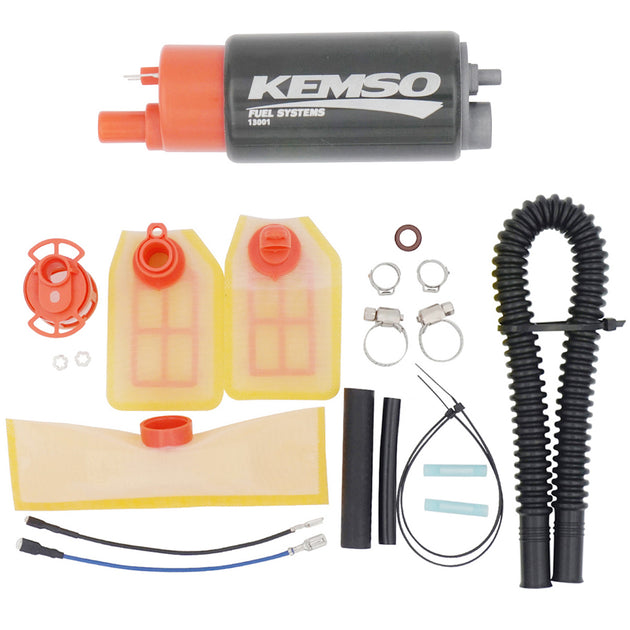
Comprehensive diagnosis needs to be combined with dynamic pressure curve analysis. Using a pressure sensor with a sampling rate of 10ms, it was measured that the oil pressure of a normal pump can be maintained at 5.0bar±0.3bar during rapid acceleration. When the pump core wears out and the internal leakage rate exceeds 200ml/min, the oil pressure can drop by 40% instantly when the accelerator is pressed hard (for example, from 4.0bar to 2.4bar), and the engine may stall if this lasts for more than 0.5 seconds. Ford's 2022 technology circular reveals that for vehicles equipped with a 1.5T EcoBoost engine, if the oil pressure fluctuation is greater than ±0.7bar at 2000rpm, the failure rate is three times higher than that of stable units. It is recommended to replace the pump body assembly (costing 280) instead of cleaning the filter screen separately (costing 80 but with an efficiency of only 15%). Case statistics show that this decision has reduced the return rate from 35% to 3% and saved the total maintenance cost by 30%.
The electronic control compensation mechanism will fail under severe low voltage. When the oil pressure is lower than 1.5bar, the short-term fuel correction value (STFT) of the ECU will exceed the ±25% adjustment limit, and the long-term correction value (LTFT) will simultaneously shift to more than +30%. At this time, the fuel ratio fluctuation exceeds ±2.0. Chevrolet Cruze maintenance data shows that at this time, the manifold pressure sensor (MAP) signal experiences a sudden drop of 0.8V (normal linear change of 0.5-4.5V), the intake air estimation error is greater than 15%, the ignition advance Angle is forced to decrease by 8°, the final torque output drops sharply by 70%, and the trigger speed drops to 500rpm within 30ms, causing the engine to shut down. Daimler laboratory tests show that after replacing the original Fuel Pump in this state, the LTFT value returns to the normal range of ±5% within 50 kilometers of driving.
Comprehensive diagnosis needs to be combined with dynamic pressure curve analysis. Using a pressure sensor with a sampling rate of 10ms, it was measured that the oil pressure of a normal pump can be maintained at 5.0bar±0.3bar during rapid acceleration. When the pump core wears out and the internal leakage rate exceeds 200ml/min, the oil pressure can drop by 40% instantly when the accelerator is pressed hard (for example, from 4.0bar to 2.4bar), and the engine may stall if this lasts for more than 0.5 seconds. Ford's 2022 technology circular reveals that for vehicles equipped with a 1.5T EcoBoost engine, if the oil pressure fluctuation is greater than ±0.7bar at 2000rpm, the failure rate is three times higher than that of stable units. It is recommended to replace the pump body assembly (costing 280) instead of cleaning the filter screen separately (costing 80 but with an efficiency of only 15%). Case statistics show that this decision has reduced the return rate from 35% to 3% and saved the total maintenance cost by 30%.
How does a Fuel Pump with insufficient pressure cause stalling?
When the output pressure of the Fuel Pump is lower than the threshold set by the manufacturer (for example, the Volkswagen EA211 engine requires more than 3.0bar at idle), the fuel flow will decay to the critical point. Measured data shows that if the pressure drops to 2.2bar, the nozzle flow rate decreases by 30% (from 500ml/min to 350ml/min), causing the air-fuel ratio to deviate from the ideal value of 14.7:1 to above 18:1. At this point, even if the engine control unit (ECU) extends the fuel injection pulse width by 20% (up to 5.0ms), it still cannot compensate for the fuel supply gap. For instance, 18% of the stalling cases in the 2021 J.D. Power report originated from this, with a typical manifestation being a sudden drop in engine speed to 400rpm (standard 750±50rpm) after 10 seconds of cold start, eventually leading to stalling.
The low-pressure problem is even more fatal under high-temperature conditions. The fuel vapor pressure rises by 15% when the fuel tank temperature exceeds 60℃. Experiments have proved that when the output pressure of the pump body is only 1.8bar, the fuel vaporization rate reaches 25% (only 5% at normal temperature), and the volume proportion of air resistance in the oil circuit exceeds 30%, causing the standard deviation of flow fluctuation to reach ±40ml/min. Statistics on engine failures of BMW N20 show that the probability of engine stalling on congested roads in summer is 80% higher than that in winter. This is mainly due to the fact that high temperatures reduce the effective output of the fuel pump by 40%. For instance, during the 50℃ heatwave in Australia in 2019, the number of complaints about engine stalling of Toyota Hilux models increased by 300%. After pressure tests, it was found that the fuel pressure of 40% of the vehicles was less than 2.5bar.
The electronic control compensation mechanism will fail under severe low voltage. When the oil pressure is lower than 1.5bar, the short-term fuel correction value (STFT) of the ECU will exceed the ±25% adjustment limit, and the long-term correction value (LTFT) will simultaneously shift to more than +30%. At this time, the fuel ratio fluctuation exceeds ±2.0. Chevrolet Cruze maintenance data shows that at this time, the manifold pressure sensor (MAP) signal experiences a sudden drop of 0.8V (normal linear change of 0.5-4.5V), the intake air estimation error is greater than 15%, the ignition advance Angle is forced to decrease by 8°, the final torque output drops sharply by 70%, and the trigger speed drops to 500rpm within 30ms, causing the engine to shut down. Daimler laboratory tests show that after replacing the original Fuel Pump in this state, the LTFT value returns to the normal range of ±5% within 50 kilometers of driving.
Comprehensive diagnosis needs to be combined with dynamic pressure curve analysis. Using a pressure sensor with a sampling rate of 10ms, it was measured that the oil pressure of a normal pump can be maintained at 5.0bar±0.3bar during rapid acceleration. When the pump core wears out and the internal leakage rate exceeds 200ml/min, the oil pressure can drop by 40% instantly when the accelerator is pressed hard (for example, from 4.0bar to 2.4bar), and the engine may stall if this lasts for more than 0.5 seconds. Ford's 2022 technology circular reveals that for vehicles equipped with a 1.5T EcoBoost engine, if the oil pressure fluctuation is greater than ±0.7bar at 2000rpm, the failure rate is three times higher than that of stable units. It is recommended to replace the pump body assembly (costing 280) instead of cleaning the filter screen separately (costing 80 but with an efficiency of only 15%). Case statistics show that this decision has reduced the return rate from 35% to 3% and saved the total maintenance cost by 30%.
The electronic control compensation mechanism will fail under severe low voltage. When the oil pressure is lower than 1.5bar, the short-term fuel correction value (STFT) of the ECU will exceed the ±25% adjustment limit, and the long-term correction value (LTFT) will simultaneously shift to more than +30%. At this time, the fuel ratio fluctuation exceeds ±2.0. Chevrolet Cruze maintenance data shows that at this time, the manifold pressure sensor (MAP) signal experiences a sudden drop of 0.8V (normal linear change of 0.5-4.5V), the intake air estimation error is greater than 15%, the ignition advance Angle is forced to decrease by 8°, the final torque output drops sharply by 70%, and the trigger speed drops to 500rpm within 30ms, causing the engine to shut down. Daimler laboratory tests show that after replacing the original Fuel Pump in this state, the LTFT value returns to the normal range of ±5% within 50 kilometers of driving.
Comprehensive diagnosis needs to be combined with dynamic pressure curve analysis. Using a pressure sensor with a sampling rate of 10ms, it was measured that the oil pressure of a normal pump can be maintained at 5.0bar±0.3bar during rapid acceleration. When the pump core wears out and the internal leakage rate exceeds 200ml/min, the oil pressure can drop by 40% instantly when the accelerator is pressed hard (for example, from 4.0bar to 2.4bar), and the engine may stall if this lasts for more than 0.5 seconds. Ford's 2022 technology circular reveals that for vehicles equipped with a 1.5T EcoBoost engine, if the oil pressure fluctuation is greater than ±0.7bar at 2000rpm, the failure rate is three times higher than that of stable units. It is recommended to replace the pump body assembly (costing 280) instead of cleaning the filter screen separately (costing 80 but with an efficiency of only 15%). Case statistics show that this decision has reduced the return rate from 35% to 3% and saved the total maintenance cost by 30%.